
5 RFP Must-Haves for CROs: Remote Patient Monitoring Labs
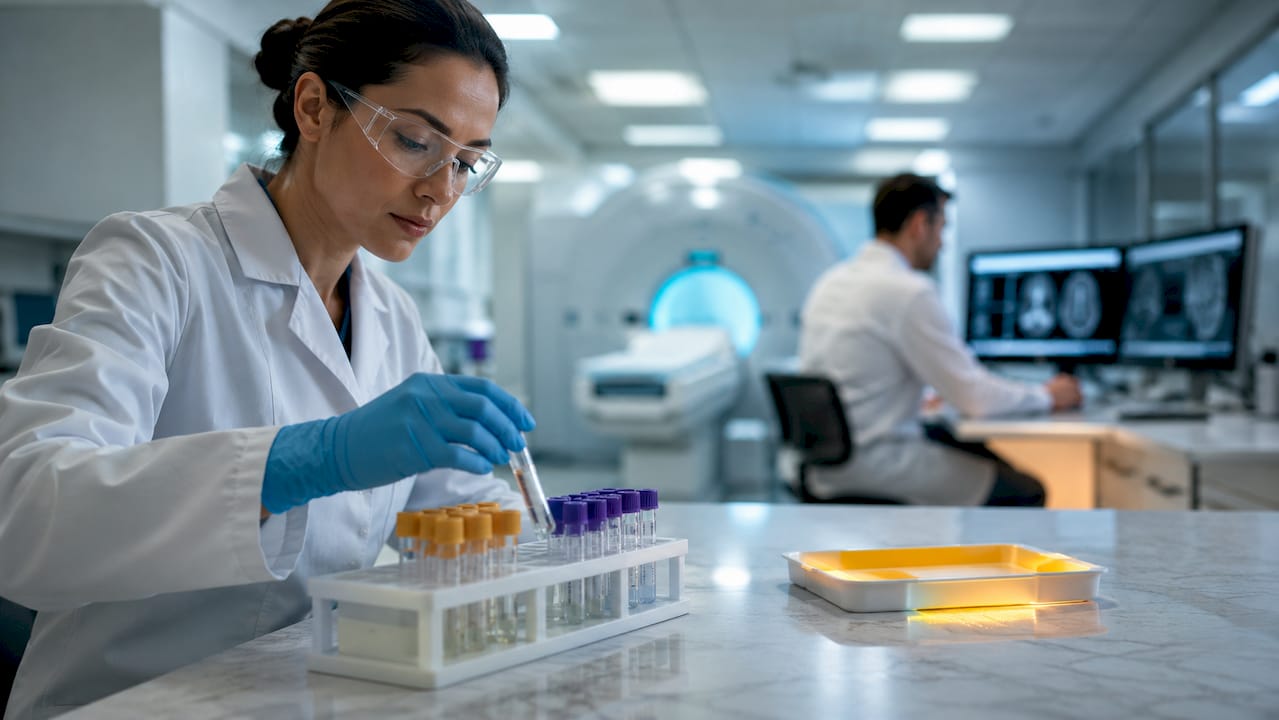
Integrated lab and imaging diagnostics become necessary the moment a remote monitoring program or decentralized trial needs standardized, submission-ready data delivered on a predictable schedule instead of stitched together from separate vendors. Kohealth Labs fits this need directly, offering a single-contract model that bundles phlebotomy, centralized imaging, AI-driven quality control, and analytics across numerous biomarkers into one analysis-ready data stream. If your program requires that kind of standardization, the requirements checklist below turns this verdict into a workable RFP.
TL;DR:
- Standardized, submission-ready data streams from integrated lab and imaging diagnostics reduce protocol deviations and speed up safety and efficacy monitoring.
- Vendor requirements should include clear scope, interoperability standards, AI quality control, compliance measures, and operational timelines to prevent delays mid-study.
- Centralized workflows for phlebotomy and imaging, with dedicated roles and standardized procedures, lower deviation rates across dispersed sites.
- Data must meet CDISC and DICOM standards, with complete metadata, audit trails, and clear query resolution protocols to ensure regulatory readiness.
- A single-contract model like Kohealth Labs simplifies vendor management, accelerates data delivery, and supports faster decision-making in remote and decentralized trial settings.
Why Integrated Lab and Imaging Diagnostics Matter for Remote Monitoring
Fragmented diagnostics create fragmented trials. When a sponsor contracts a separate phlebotomy vendor, a separate imaging core lab, and a separate data broker, every handoff introduces a chance for a protocol deviation, a missed turnaround window, or a data field that never quite maps to the statistical analysis plan.
Centralized imaging teams that follow standardized site qualification, acquisition, and transfer workflows measurably reduce protocol deviations and delays compared to ad hoc, site-by-site imaging management, according to a technical note on centralized clinical trial imaging data management. The same logic extends to lab testing. Combining laboratory, radiology, and pathology data under one workflow shortens the path from sample collection to actionable result, which matters most for safety monitoring in remote cohorts where a delayed lab value can mean a missed adverse event window.
Integration also does something subtler than speed: it adds context. A biomarker trend read alongside imaging and pathology data tells a richer safety and efficacy story than any single data type alone, which is precisely why combined molecular, pathology, and imaging approaches have shown stronger stratification and monitoring precision in oncology trials using integrated diagnostics. Integrated diagnostics that pair informatics and clinical decision support with lab and imaging data also improve diagnostic accuracy and help triage which tests actually need to run, according to a review of integrated diagnostics frameworks.
The operational payoff shows up in a few consistent places:
- Fewer vendor handoffs means fewer opportunities for a sample or scan to arrive incomplete.
- A single data pipeline reduces the manual reconciliation that eats into a study team’s timeline.
- Richer, multi-modal data supports earlier detection of safety signals in dispersed patient populations.
- Centralized read teams catch acquisition errors before they become protocol deviations.
Combined lab, radiology, and pathology diagnostics can also reduce wait times and help route patients to the right level of care by expediting the right tests up front, an effect documented in integrative diagnostics literature on value-based care.
What Should Your RFP Require From a Remote Monitoring Lab Partner?
A vendor requirements brief for remote patient monitoring labs needs to cover five distinct zones: scope, interoperability, AI and quality control, compliance, and operational service levels. Miss one and you will find out about it mid-study, usually at the worst possible time.
- Scope of services. Specify phlebotomy modality (in-home draws, clinic-based, or mail-in kits), imaging acquisition plus centralized read, and any specialized panels you need across the 100+ biomarker categories relevant to your endpoints.
- Interoperability. Require FHIR or HL7 messaging standards, documented provider-portal APIs, EHR integration, and automated result push with event-based triggers for abnormal values.
- AI and quality control. Ask vendors to demonstrate automated deviation detection, delivery of analysis-ready data bundles, and complete DICOM metadata alongside data transfer forms (DTFs).
- Quality and compliance. Confirm CDISC data mapping, full audit trails, documented chain-of-custody, de-identification procedures, and regulatory submission readiness.
- Operational service levels. Get turnaround-time ranges in writing, courier pickup cutoffs, escalation workflows for failed draws or rejected samples, and clear sample rejection thresholds.
Central lab and imaging vendors are treated as a strategic necessity, not a convenience, for Phase 3 trials precisely because standardized testing and submission-ready outputs are what regulators expect to see, according to guidance on central labs and imaging in Phase 3 trials. Build your requirements brief with that expectation in mind rather than treating it as an add-on you negotiate later.
Pro Tip: Ask every finalist vendor to walk you through one real deviation they caught before it reached your data set. A vendor that cannot produce a concrete example probably does not have the QC layer they claim to have.
How Do Collection and Imaging Logistics Actually Work Across Dispersed Sites?
Mobile phlebotomy is the collection layer that makes remote monitoring possible, but only when it is scheduled and credentialed correctly. A phlebotomist who shows up without the right requisition, or who mislabels a tube at bedside, creates a rejected sample and a lost monitoring window. Some telehealth platforms build this by pairing mobile phlebotomy services with existing lab ordering workflows so the provider’s ordering process and results timeline never change, which reduces integration friction considerably.
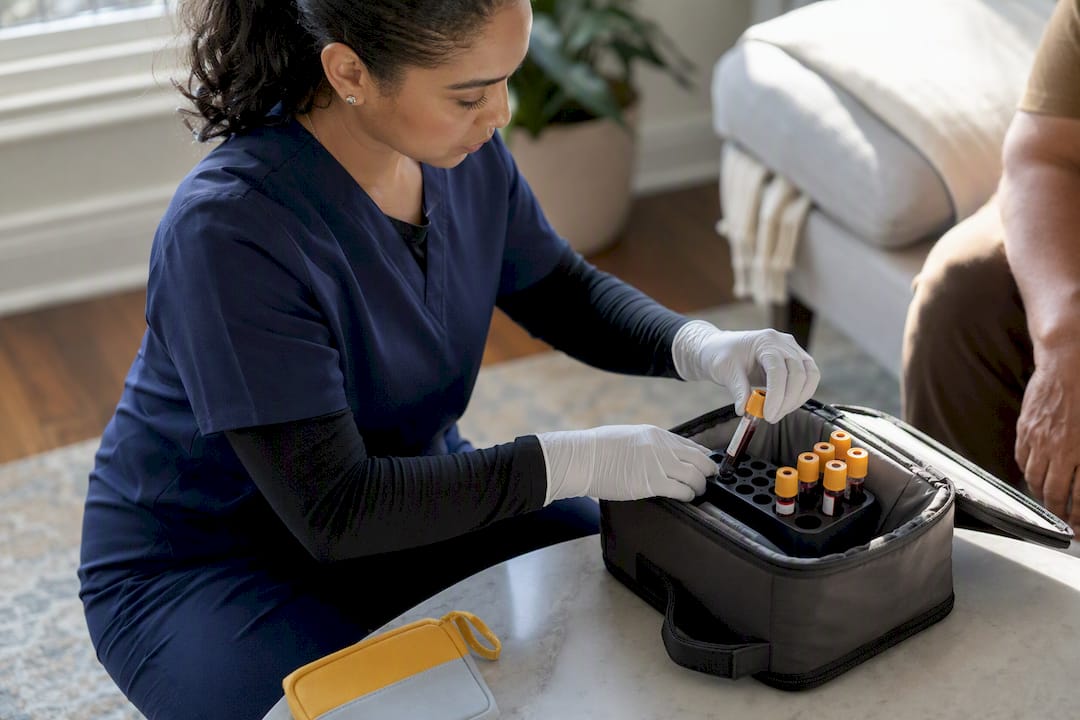
Imaging logistics carry their own complexity. Site qualification, standardized acquisition protocols, and consistent handling of data transfer forms are the difference between a research PACS environment that produces clean, submission-ready imaging and one that generates a backlog of queries. The most common deviations in decentralized programs include missed DTFs, incomplete DICOM headers, and inconsistent de-identification before transfer.
A few operational patterns consistently reduce these deviations:
- Dedicated lead imaging technologist roles that own site-level acquisition consistency.
- Standardized lab and imaging manuals aligned to the protocol, statistical analysis plan, and risk management framework, a practice detailed in guidance on aligning lab and imaging manuals with trial protocols.
- Courier cutoff times built around cold-chain stability windows, not just pickup convenience.
- Chain-of-custody documentation that travels with the sample from collection to result, not just from lab intake.
Some telehealth-integrated diagnostics workflows now bundle national lab partnerships directly into the platform, an approach CareValidate uses to keep collection options flexible without adding vendor burden to the provider. Kohealth Labs applies the same principle through standardized SOPs and a centralized imaging team, which keeps deviation rates lower across geographically scattered sites without asking your operations staff to manage five separate vendor relationships. Our guide to telehealth-integrated diagnostics walks through eight real operational models worth reviewing before you finalize your own workflow.
What Data Standards and QA Should You Require in the Contract?
Your data deliverables need to arrive in formats your biostatistics and regulatory teams can use without a translation layer. That means CDISC-mapped lab data, DICOM imaging packages with complete metadata, and de-identified exports ready for submission rather than reformatting.
The 21st Century Cures Act has raised the baseline for interoperability and patient access, which puts real pressure on how fast and how completely a diagnostics vendor delivers data back into your systems. A vendor that treats interoperability as optional is a vendor that will slow your study down.
Your contract should spell out exactly what the AI QC layer is required to catch:
- Out-of-range values inconsistent with prior patient trends.
- Missing or malformed DICOM headers before imaging transfer.
- Sample-level chain-of-custody gaps.
- Query resolution timelines with named accountable roles on both sides.
Centralizing this query resolution under one team, rather than routing it through separate lab and imaging vendors, cuts down on the back-and-forth that otherwise consumes weeks of a study’s timeline. Retention policies and audit logging round out the contract: confirm how long raw and processed data are retained, and whether metadata completeness is checked before or after delivery, not left for your team to discover later. Our breakdown of biomarker analytics in polyclinic care covers how alerting logic should be structured for this kind of monitoring.
What We Have Learned Building Integrated Diagnostics for Remote Monitoring
The pattern we see most often is not a bad vendor. It is too many good vendors, none of them talking to each other. A sponsor contracts a lab, a separate imaging core, and a separate data broker, then spends months reconciling formats that should have matched from day one. A single-contract model removes that orchestration burden entirely, and centralized AI QC catches deviations at the point of capture rather than during a data lock review, when fixing them costs real time.
— Kohealth Labs
How Kohealth Labs Fits Into Your Remote Monitoring Program
Kohealth Labs delivers lab, radiology, courier logistics, and AI-driven analysis-ready data bundles under one contract, so your team stops managing separate vendor relationships for phlebotomy, imaging, and data formatting. This is how integrated diagnostics, spanning labs, radiology, and data. accelerates clinical trials: fewer handoffs, faster query resolution, and data that arrives ready for your biostatistics team instead of requiring another round of cleanup.

Onboarding includes provider portal setup, EHR integration, and access to testing panels across 100+ biomarkers, with billing structured for research sponsors, healthcare practices, and wellness programs alike. Turnaround windows and escalation paths are defined up front, not negotiated after your first missed sample. If your program needs submission-ready data without the vendor-management overhead, request a technical integration brief for CROs and pharma programs or review our pathology laboratory services to see how the diagnostics scope maps to your protocol.
Where to Go Deeper on Integrated Diagnostics and Remote Monitoring
- Centralized clinical trial imaging data management for a detailed look at DTF handling and site qualification workflows.
- Integrated diagnostics review covering informatics, interoperability, and the Cures Act’s impact on data delivery.
- Central labs and imaging in Phase 3 trials for standardization and global compliance guidance.
- Kohealth Labs’ own guide on centralized lab’s role in chronic disease management for recurring monitoring use cases.
This article is general information, not a substitute for advice from a qualified doctor. Consult a qualified healthcare professional about your own circumstances before acting on anything here.