
How to Build and Run an NGS Laboratory in the U.S.
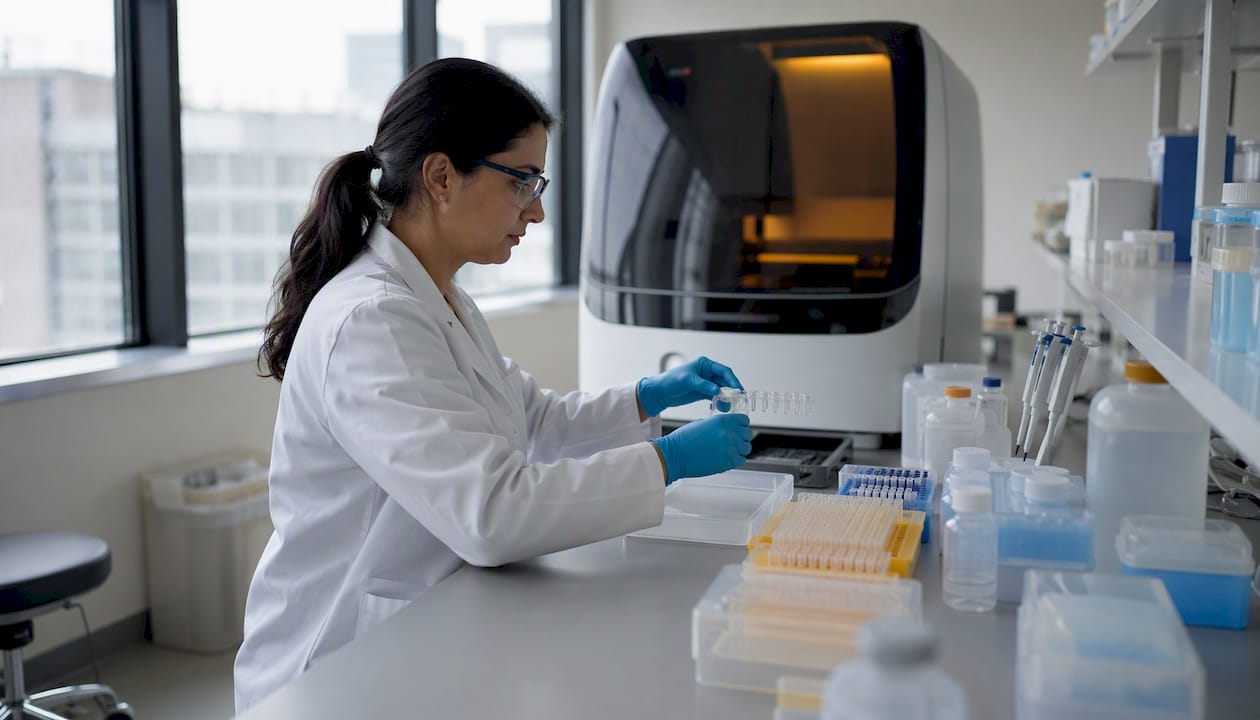
An NGS laboratory is a regulated clinical or research facility that converts patient or research samples into validated sequence data and clinically actionable reports. It rests on three operational pillars: a controlled wet lab workflow (pre-analytic handling through library preparation), a validated sequencing platform, and a quality-managed bioinformatics and reporting pipeline. Together, those three pillars define whether your lab produces data a clinician can act on or data that sits in a queue waiting for a rerun.
The bottom line for lab leaders: in-house next generation sequencing makes sense when your test volume justifies the capital, your team can sustain a documented quality management system (QMS), and your clinical program requires rapid turnaround or proprietary assay design. If those conditions aren’t met, a reference lab or send-out model is often the more defensible choice until volume and staffing catch up.
Every functional NGS laboratory needs these physical and digital elements in place before the first clinical sample runs:
- Sample QC instruments: TapeStation, Qubit fluorometer, and Bioanalyzer for nucleic acid integrity and quantification
- Sequencer class: benchtop (low-to-mid throughput) or production-scale instrument matched to monthly test volume
- Compute and storage: on-premises HPC cluster, cloud environment, or hybrid; tiered storage for raw, processed, and archived data
- QMS infrastructure: SOPs, equipment calibration logs, personnel competency records, and a change-control process
- CLIA/CAP compliance framework: validation documentation, proficiency testing enrollment, and inspection-ready records
Key Takeaways
A well-run NGS laboratory succeeds when wet lab quality, validated bioinformatics, and a documented QMS operate as a single system, not three separate workstreams.
| Point | Details |
|---|---|
| Three core pillars | Every clinical NGS lab requires a controlled wet lab workflow, a validated sequencing platform, and a quality-managed bioinformatics pipeline. |
| Validation before go-live | Analytical validation covering sensitivity, LOD, reproducibility, and reportable range must be complete and documented before the first clinical sample is reported. |
| Bioinformatics is the bottleneck | Compute, pipeline versioning, and a qualified bioinformatician are as critical as the sequencer; budget and hire for them first. |
| CLIA/CAP and CDC resources | U.S. labs must operate under CLIA and, ideally, CAP accreditation; the CDC NGS Quality Initiative provides customizable validation templates and QMS tools. |
| Kohealth Labs integration | Kohealth Labs delivers single-contract integrated diagnostics, AI quality checks, and analysis-ready data bundles that reduce turnaround time for NGS-enabled clinical trials. |
How does an NGS laboratory choose the right sequencing technology?
NGS is an umbrella term, and using it without qualification when selecting a platform leads to mismatched workflows. The two primary categories, short-read massively parallel sequencing and long-read sequencing, have distinct clinical strengths, and choosing between them is one of the first decisions a new genomic analysis lab must make.
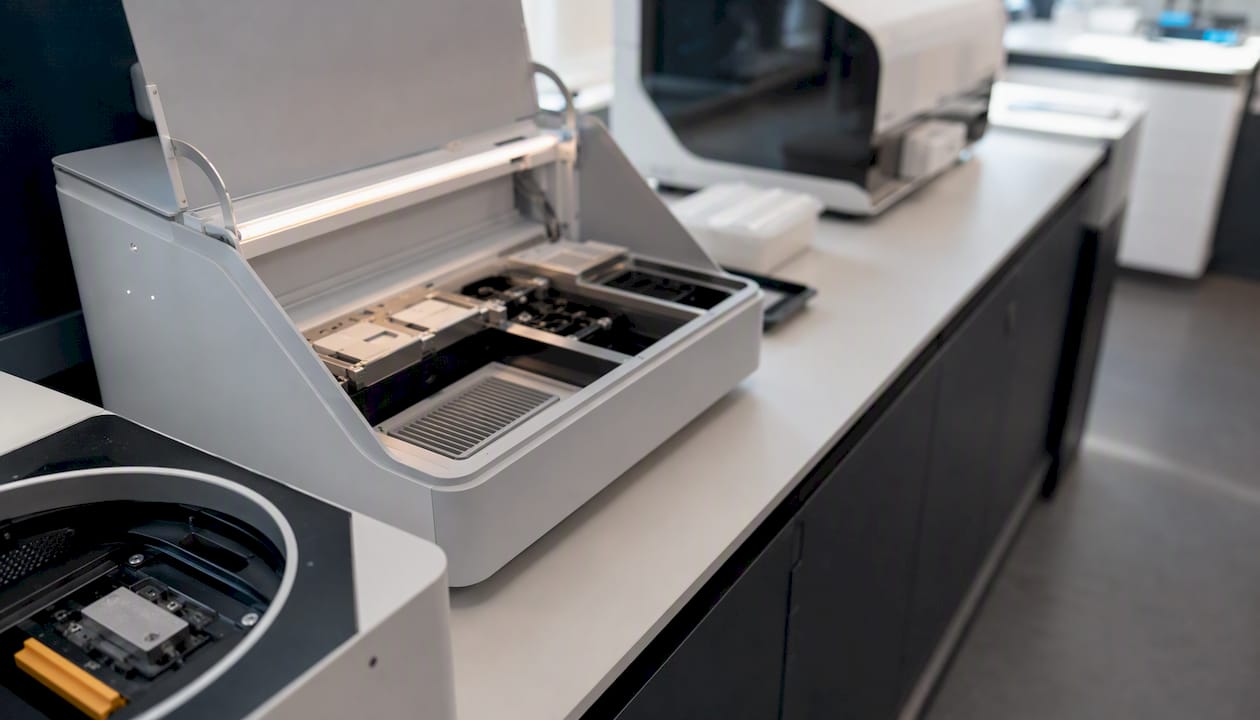
Short-read platforms (cycle-based synthesis, reads typically 75–300 bp) dominate clinical diagnostics today. They deliver high base accuracy, mature bioinformatics tooling, and the broadest reagent ecosystem. Illumina sequencing systems can produce data output ranging from hundreds of kilobases to multiple terabases per run depending on instrument configuration, which means a single platform family can serve a small targeted panel and a whole-genome program. The trade-off is read length: short reads struggle with repetitive regions, structural variants, and phasing of heterozygous alleles.
Long-read platforms (Pacific Biosciences SMRT, Oxford Nanopore) generate reads in the kilobase-to-megabase range. They resolve structural variants, phased haplotypes, and methylation directly from native DNA. Error rates are higher per base (though improving rapidly), and per-base costs remain elevated. For most U.S. clinical labs, long-read sequencing is currently a specialized complement rather than a primary diagnostic platform.
| Application | Preferred approach | Typical read depth | Key trade-off |
|---|---|---|---|
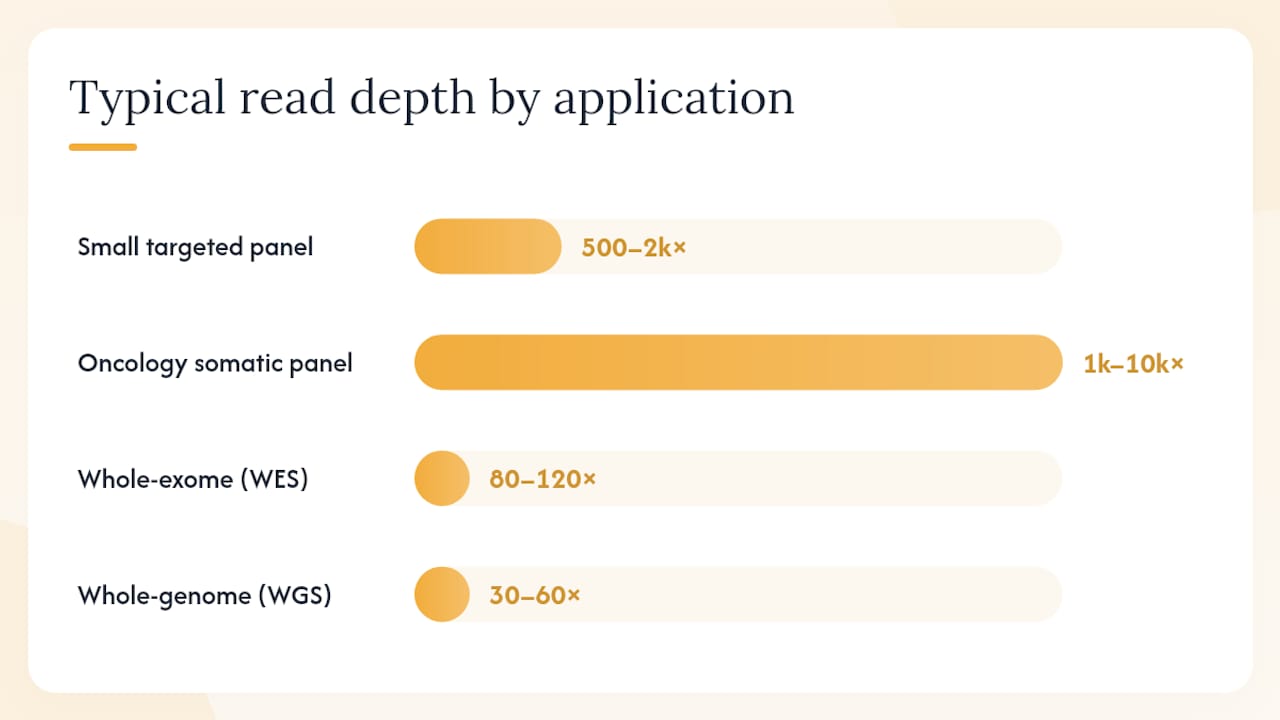
| Small targeted panel (50–100 genes) | Short-read, amplicon or hybrid capture | 500×–2,000× | High sensitivity; limited structural variant detection |
| Oncology somatic panel / ctDNA | Short-read, hybrid capture or amplicon | 1,000×–10,000× | Depth drives sensitivity; cost scales with depth |
| Whole-exome sequencing (WES) | Short-read | 80×–120× mean | Misses non-coding variants; cost-effective for rare disease |
| Whole-genome sequencing (WGS) | Short-read (clinical); long-read (research/SV) | 30×–60× (clinical) | Highest data volume; highest per-sample cost |
| RNA sequencing / transcriptomics | Short-read, stranded | 30–50M reads | Requires RNA integrity; separate extraction workflow |
| Infectious disease / metagenomics | Short-read; long-read for real-time | Variable | Host depletion critical; bioinformatics complexity high |
Platform economics matter as much as technical fit. Sequencing costs have declined dramatically over the past two decades, but per-sample cost is still heavily shaped by batching efficiency and instrument utilization. A benchtop instrument running one sample at a time costs far more per sample than the same instrument batching 16 or 48 samples per run. Build your platform selection around realistic monthly volumes, not peak projections.
What does the full NGS laboratory workflow look like, step by step?
A standard NGS workflow moves through three core phases: nucleic acid isolation and purification, library preparation with quality assessment, and sequencing followed by bioinformatics analysis. Each phase has defined acceptance criteria, and a failure at any step propagates forward.
-
Pre-analytic sample handling. Acceptable sample types include FFPE tissue, fresh-frozen tissue, peripheral blood (EDTA), saliva, buccal swabs, and cell-free plasma for liquid biopsy. Each type has specific collection, transport, and storage requirements. Chain-of-custody documentation starts at accessioning. Contamination controls (dedicated pre-PCR and post-PCR spaces, unidirectional workflow) must be established before clinical samples enter the lab.
-
Nucleic acid extraction and QC. DNA or RNA is extracted using validated kits matched to sample type. QC is non-negotiable: the Qubit fluorometer gives accurate mass quantification; the TapeStation or Bioanalyzer assesses fragment size distribution and RNA integrity number (RIN). Common failure modes include low yield from FFPE samples, degraded RNA from delayed processing, and co-purified inhibitors from certain tissue types. Acceptance criteria (minimum concentration, minimum RIN or DIN, A260/A280 ratio) must be defined in your SOP before any clinical run.
-
Library preparation. Targeted panels use either amplicon-based or hybrid-capture approaches. Amplicon libraries are faster and cheaper but more susceptible to allele dropout at primer sites. Hybrid capture is more flexible and handles larger gene sets. Adapter ligation, indexing (unique dual indexes to prevent index hopping), and PCR amplification steps each introduce bias. Multiplexing 8–48 samples per run is standard; your indexing scheme must prevent barcode collisions and be validated for your specific instrument.
-
Sequencing run setup and monitoring. Load the library pool at the validated concentration. Include a positive control (characterized reference sample), a negative control (no-template or water), and a PhiX spike-in (or equivalent) for run quality monitoring. Watch real-time metrics: cluster density, percent passing filter, Q30 score, and error rate. Common run-failure causes include incorrect library concentration, flow cell storage errors, and reagent cartridge issues.
-
Post-run primary analysis. The instrument performs basecalling and generates FASTQ files. Demultiplexing assigns reads to samples by index. Primary QC metrics to review: total reads per sample, percent reads on target, mean coverage depth, uniformity of coverage, and fraction of bases above the minimum depth threshold. Samples falling below acceptance criteria are flagged for rerun before secondary analysis begins.
-
Secondary analysis: alignment, variant calling, and annotation. Reads align to a reference genome (GRCh38 for most clinical programs). Variant callers (GATK HaplotypeCaller for germline, somatic callers such as Mutect2 for tumor) generate VCF files. Annotation tools (VEP, ANNOVAR) add population frequency, functional prediction, and clinical database cross-references. Filtering removes low-quality calls and common benign variants.
-
Tertiary analysis: variant interpretation and clinical reporting. Variants are classified per ACMG/AMP guidelines (germline) or AMP/ASCO/CAP somatic guidelines. Pathogenic and likely pathogenic variants, variants of uncertain significance (VUS), and reportable incidental findings each require defined handling in your SOP. The final report must include the assay’s analytical limitations, coverage statistics for the regions reported, and a clear clinical interpretation.
Typical turnaround times: A small targeted panel (50–100 genes) can complete wet lab to report in 3–5 business days with batching. Whole-exome sequencing typically runs 7–14 days. Whole-genome sequencing, including bioinformatics and interpretation, commonly takes 14–21 days in a clinical setting. Batching is the single biggest lever on TAT for low-to-mid volume labs; running one sample at a time doubles or triples effective cost and extends TAT unnecessarily.
For labs also managing PCR-based diagnostics alongside NGS, the PCR testing workflow for clinical trials shares several pre-analytic and chain-of-custody principles worth reviewing.
How do quality management and clinical validation work in a U.S. NGS lab?
Clinical NGS in the United States operates under CLIA (Clinical Laboratory Improvement Amendments) and, for labs seeking accreditation, CAP (College of American Pathologists) checklists. The regulatory expectation is clear: before a test is offered clinically, the laboratory must demonstrate that it performs as claimed under the conditions in which it will be used.
A documented QMS is the foundation. It covers SOPs for every step of the workflow, equipment calibration and preventive maintenance schedules, personnel competency assessments (initial and annual), reagent lot verification, and a change-control process that triggers re-validation when a critical component changes. None of this is optional in a CLIA-regulated environment.
Analytical validation study design must address:
- Analytical sensitivity and specificity: the assay’s ability to detect true variants and exclude false positives at the claimed variant allele fraction (VAF) threshold
- Limit of detection (LOD): the lowest VAF or copy number at which the assay reliably calls a variant; established with dilution series using characterized reference materials
- Reproducibility and precision: intra-run, inter-run, inter-operator, and inter-instrument replicates
- Reportable range: the range of VAF or copy number over which results are clinically valid
- Reference materials: use well-characterized reference standards (e.g., NIST Reference Materials, Horizon Discovery HD200 or HD753 cell line mixes, Coriell cell lines for germline) rather than contrived samples alone
The CDC Next Generation Sequencing Quality Initiative provides customizable quality management resources and validation templates specifically designed for labs building or maturing an NGS quality system. This is one of the most practical starting points for U.S. labs, particularly those without a large quality team.
Proficiency testing (PT) and external quality assessment (EQA) are required under CLIA for all regulated analytes. For NGS assays, CAP offers PT programs for hereditary cancer panels, pharmacogenomics, and somatic oncology panels. Where CAP PT is not available for a specific assay, labs must conduct alternative PT: split-sample exchanges with another CLIA-certified lab, or use of characterized reference materials at defined intervals. PT must be performed at least twice per year for most regulated analytes, and results must be reviewed and documented.
Documentation requirements include: a signed validation plan before the study begins, traceable lot information for all reagents used during validation, raw performance data, a final validation report with acceptance criteria and pass/fail determination, and a director sign-off. These records must be retained per CLIA requirements (generally two years minimum, longer for some analyte categories).
What bioinformatics infrastructure does a clinical NGS lab need?
The bottleneck for most labs is not raw sequencing throughput but the downstream bioinformatics pipeline. Cloud-integrated computational resources and a dedicated bioinformatics team are what convert raw sequencer output to clinically actionable variant calls quickly and reproducibly. Nationwide Children’s Genomic Services, for example, built a cloud-based computational environment on AWS to scale HPC workloads and reduce analysis time.
Pipeline stages and common tools:
- Basecalling and demultiplexing: instrument-native software (Illumina DRAGEN, BaseSpace) or open-source (bcl2fastq, Dorado for Oxford Nanopore)
- Quality trimming: Trim Galore, fastp
- Alignment: BWA-MEM2 or DRAGEN for short reads; minimap2 for long reads
- Variant calling: GATK HaplotypeCaller (germline SNV/indel), Mutect2 (somatic), CNVkit or GATK CNV (copy number), Manta (structural variants)
- Annotation: Ensembl VEP, ANNOVAR, ClinVar, gnomAD, OncoKB
- Report generation: LIMS-integrated reporting modules or custom scripts with PDF output
On-premises vs. cloud trade-offs. On-prem HPC gives you full data sovereignty and predictable latency but requires capital for servers, storage, and IT staff. Cloud (AWS, Google Cloud, Microsoft Azure) offers elastic scaling, managed security services, and pay-per-use economics, but PHI in the cloud requires a Business Associate Agreement (BAA) with the provider and rigorous access controls. A hybrid model, where raw data is processed on-prem and archival storage moves to cold cloud tiers, is common in mid-size clinical labs.
Storage tiers and archival strategy. Raw FASTQ files for a 30× WGS run occupy roughly 100–150 GB per sample. A lab running 50 WGS samples per month generates 5–7.5 TB of raw data monthly, before alignment files (BAM/CRAM) and VCFs. Define three tiers: hot storage (active analysis, NVMe or SSD-backed), warm storage (recent results, accessible within hours), and cold archival (long-term retention, tape or cloud glacier). CLIA requires retaining records; your data retention policy must specify which file types are retained and for how long.
Validation and version control. Every pipeline used for clinical reporting must be validated before use and re-validated when a component changes. Containerize tools with Docker or Singularity and pin exact version tags. Use workflow engines (Nextflow, Snakemake, WDL/Cromwell) to enforce reproducibility. Hash pipeline inputs and outputs to create an immutable audit trail. Store pipeline code in a version-controlled repository (Git) with tagged releases corresponding to validated versions.
Security and compliance checklist:
- PHI encrypted at rest (AES-256) and in transit (TLS 1.2 or higher)
- Role-based access control: analysts see only their assigned samples; directors have broader read access; no shared credentials
- Audit logging: every query, download, and report generation event is logged with user ID and timestamp
- BAA in place with all cloud providers handling PHI
- Annual penetration testing and vulnerability scanning
Pro Tip: Hash every input FASTQ and every output VCF at the time of generation using SHA-256, and store those hashes in your LIMS alongside the run record. When an audit asks whether a report was generated from the correct input files, you can answer in seconds rather than hours.
Which clinical applications benefit most from NGS, and what should you expect?
NGS sequences millions of fragments in parallel, which gives it sensitivity advantages over Sanger sequencing for low-frequency variants, mosaic mutations, and complex genomic rearrangements. That sensitivity advantage is what drives adoption across oncology, constitutional genetics, and infectious disease, but each application has distinct performance requirements and realistic limitations your team should set before the first clinical report goes out.
Oncology: tumor profiling and liquid biopsy. Somatic mutation panels covering a set of genes at high sequencing depth detect SNVs, indels, copy number alterations, and fusions relevant to targeted therapy selection. Liquid biopsy (ctDNA) panels require very high sequencing depth because circulating tumor DNA can be a very small fraction of total cell-free DNA in early-stage or treated patients. The sensitivity-cost trade-off is direct: every 10-fold increase in sequencing depth roughly doubles reagent cost. For tumor profiling, a 5–7 business day TAT is achievable with good batching; ctDNA assays with ultra-deep sequencing may run 7–10 days.

Constitutional genetics and rare disease. Trio whole-exome or whole-genome sequencing (proband plus both parents) is the most powerful approach for identifying de novo variants in pediatric rare disease. WES detects variants in coding regions with high sensitivity at 80×–120× mean depth; WGS adds non-coding variants and improves detection of structural variants and copy number changes. Secondary findings (ACMG SF v3.2 reportable genes) must be addressed in your consent and reporting SOP before the first trio runs.
Infectious disease sequencing. Whole-genome sequencing of bacterial isolates is now standard for outbreak investigation and antimicrobial resistance (AMR) profiling in public health labs. Turnaround for clinical metagenomics is typically 24–72 hours for urgent cases when a dedicated pipeline is in place, but bioinformatics complexity and the absence of standardized clinical interpretation frameworks remain real barriers.
Microbiome and metagenomics caveats. 16S rRNA amplicon sequencing characterizes microbial community composition but cannot detect AMR genes or provide species-level resolution for all taxa. Shotgun metagenomics is more informative but generates far larger datasets and requires careful controls for reagent contamination (kit-derived DNA is a known confound at low microbial biomass). Clinical interpretation of microbiome data remains largely investigational; labs should be explicit about the research-use-only status of microbiome reports until validated clinical decision thresholds exist.
For labs integrating NGS-derived biomarker data into clinical decision-making, the biomarker analytics guide for polyclinic patient care offers a useful framework for how sequence-level findings translate to actionable clinical reports.
How do you choose the right platform and instrument capacity for your lab?
Platform selection is a capital decision with a 5–7 year horizon. The wrong choice at this stage costs more than the instrument itself: it costs staff time, reagent waste, and delayed clinical service launch. Ask these questions before you commit.
Decision questions for vendors and procurement:
- What is the minimum and maximum number of samples per run, and what is the per-sample cost at each batch size?
- What read lengths are supported, and are they sufficient for your target applications (amplicon panels, exome, WGS, RNA-seq)?
- What is the total cost of ownership over five years, including service contracts, reagent pricing tiers, and software licensing?
- What is the vendor’s on-site service response time, and what is the mean time to repair for your geography?
- Are reagents available through multiple distributors, or is there a single-source dependency?
Capacity planning math. Start with your projected monthly test volume. If you plan to run 80 exome samples per month and your instrument supports 16 samples per run, you need five runs per month. That means planning for six runs per month, not five. If a run takes 40 hours of instrument time, you need roughly 240 hours of instrument time per month, which is achievable on a single instrument with careful scheduling but leaves little buffer.
Worked example. A lab projecting 120 targeted panel samples per month, with 48 samples per run, needs 2.5 runs per month. Round up to three runs, add one validation/QC run per month, and plan for four runs. At a reagent cost of approximately $4,000–$6,000 per run (a realistic range for mid-size targeted panel kits; confirm current pricing with your vendor), monthly reagent spend is $16,000–$24,000 before labor and compute. Per-sample reagent cost at 48 samples per run is roughly $83–$125. That number improves substantially at full batch utilization and worsens sharply when runs are partially filled.
Automation trade-offs. Liquid-handling automation (Hamilton, Beckman Coulter Biomek) reduces hands-on time and inter-operator variability in library preparation, but adds capital cost and requires its own validation and maintenance. For labs running fewer than 20 samples per week, manual library prep with strict SOPs is often more cost-effective. Above that threshold, automation typically pays back within 12–18 months through reduced labor and lower failure rates.
For labs in single-specialty practice settings evaluating whether to bring NGS in-house, the lab testing optimization guide for single-specialty practices covers the infrastructure and staffing considerations in practical terms.
What does a practical launch checklist look like for a new clinical NGS lab?
Launching a CLIA/CAP-compliant NGS laboratory is a phased process. Labs that try to compress all three phases into a single sprint consistently run into avoidable problems: incomplete validation documentation, undertrained staff, and bioinformatics pipelines that were never formally verified. A phased approach takes longer upfront but produces a defensible, inspection-ready program.
-
Equipment installation qualification (IQ/OQ). Verify that each instrument is installed per manufacturer specifications (IQ) and performs within manufacturer-specified parameters under your facility conditions (OQ). Document ambient temperature, humidity, power supply, and network connectivity. Retain all IQ/OQ records; CAP inspectors will ask for them.
-
Bioinformatics environment setup and pipeline verification. Before any wet lab validation begins, confirm that your pipeline produces correct outputs on known reference datasets. Run NA12878 (GIAB HG001) or another well-characterized reference sample through the full pipeline and compare variant calls to the GIAB truth set. Document concordance, false-positive rate, and false-negative rate. This step is often skipped and is one of the most common causes of post-launch reporting errors.
-
Analytical method validation. Run your validation study per the design described in the quality section above. Minimum recommended sample numbers: 20–30 positive samples covering the variant types the assay is designed to detect (SNV, indel, CNV, fusion as applicable), 10 negative samples, a dilution series of at least 5 concentration points for LOD determination, and 3 replicates per condition for reproducibility. Use characterized reference materials wherever possible.
-
Report template verification. Generate draft reports from validation samples and have the laboratory director and a clinical reviewer confirm that variant classifications, analytical limitations statements, and coverage statistics are accurate and complete. A report error caught during verification is a documentation note; the same error after go-live is a patient safety event.
-
SOP library. Draft and approve these SOPs before accepting clinical samples: sample receipt and accessioning, nucleic acid extraction by sample type, library preparation (one SOP per method), sequencing run setup and monitoring, primary QC review, bioinformatics pipeline execution, variant interpretation and classification, report generation and release, pipeline change control, and corrected report procedure.
-
Personnel competency documentation. Each staff member performing regulated steps must have documented initial competency (direct observation, written or practical test, review of work product) before working independently on clinical samples. Annual competency re-assessment is required under CLIA.
-
Proficiency testing enrollment. Enroll in CAP PT programs for your analyte categories before go-live. If CAP PT is not available for your specific assay, document your alternative PT plan and get director approval before the first clinical report.
-
Phased launch timeline. A realistic phased launch looks like this: months 1–2 for equipment installation, pipeline setup, and reference sample testing; months 3–4 for full analytical validation and SOP finalization; month 5 for internal pilot (staff proficiency, report review, PT enrollment); month 6 for clinical go-live with initial volume cap and enhanced QC review. Full-scale clinical service typically begins in month 7–8 once the first PT cycle is complete.
For labs also planning to offer pharmacogenomics (PGx) reporting as part of their NGS menu, the guide on launching a PGx reporting service covers interpretation workflow integration in practical detail.
How integrated diagnostics and AI-ready data pipelines accelerate clinical NGS programs
The shift toward real-time, cloud-integrated diagnostic workflows is the most consequential operational change in clinical NGS today. Labs that design AI-ready pipelines and collaborative bioinformatics teams consistently shorten time-to-report, and programs that integrate genomic data with imaging and other biomarkers deliver richer datasets to sponsors and clinicians with fewer coordination steps.
For clinical trial programs in particular, the benefits of integration are concrete:
- Faster enrollment and monitoring: when lab, imaging, and genomic data arrive in a single consolidated package, site coordinators spend less time chasing results from multiple vendors and more time on patient-facing work
- Fewer sample reruns: AI-driven quality checks that flag deviations at the point of data generation catch problems before they propagate to the analysis stage, reducing the rerun rate that inflates both cost and TAT
- Consolidated data packages for CROs and sponsors: analysis-ready bundles that include sequence data, variant calls, QC metrics, and imaging findings in a standardized format reduce the data harmonization burden on sponsor biostatistics teams
Implementation requires attention to data harmonization (consistent metadata schemas, standardized variant nomenclature per HGVS), privacy-by-design (de-identification pipelines, consent-aligned data sharing), and payer alignment. On the reimbursement side, NGS tests in the U.S. are covered under specific CPT codes: 81455 for large somatic panels, 81415–81416 for exome sequencing, and 81425–81427 for genome sequencing. Coverage policies vary by payer and indication; Medicare coverage is governed by Local Coverage Determinations (LCDs) from the relevant MAC, and prior authorization is required by most commercial payers for WES and WGS. Labs should build reimbursement verification into their order intake workflow, not as an afterthought.
For a closer look at how integrated diagnostics and telehealth data delivery work in practice, the telehealth-integrated diagnostics examples article illustrates real-world delivery models that parallel the NGS data delivery challenge.
What lab directors wish they had known before launching an NGS program
Most operational problems in a new DNA sequencing facility are predictable. The labs that avoid them share one characteristic: they treated bioinformatics, quality, and staffing as co-equal priorities with the instrument purchase, not as problems to solve after the sequencer arrived.
Common pitfalls and tactical fixes:
- Under-budgeting bioinformatics: the instrument is the visible cost; compute, storage, pipeline development, and a qualified bioinformatician are the invisible ones. Budget at least as much for bioinformatics infrastructure as for the sequencer itself in year one.
- Skipping external proficiency testing: internal controls tell you whether your process is consistent; PT tells you whether your results are correct relative to an external standard. Labs that skip PT enrollment until after go-live face a compliance gap that is difficult to close retroactively.
- Insufficient sample QC gates: accepting samples that fail nucleic acid QC “just to see what happens” produces failed runs, wasted reagents, and staff frustration. Hard acceptance criteria enforced at the extraction step save more time than they cost.
- Hiring the sequencer operator before the bioinformatician: the sequencer runs itself for most of the run; the bioinformatics pipeline needs a human to build, validate, and maintain it. Hire your bioinformatician first, or contract that function before the instrument is installed.
- Version-locking the pipeline too late: labs that begin clinical reporting before formally versioning and validating their pipeline create a documentation problem that grows with every sample reported. Lock the pipeline version before the first clinical report, not after.
First 6–12 months: what actually matters. Spend the first three months on pipeline verification and reference sample testing before you touch a clinical sample. Use months 4–6 to run validation samples in parallel with any send-out testing you are currently doing; this gives you a direct performance comparison and builds confidence in your results. By month 9, your first PT cycle should be complete and your staff should be performing competency assessments on schedule.
Who to hire first. A clinical laboratory scientist (CLS) with NGS wet lab experience and a bioinformatician with clinical pipeline experience are the two non-negotiable hires. A laboratory director with CLIA-qualifying credentials and NGS expertise is required before any clinical reporting begins. Quality and compliance support, whether in-house or contracted, should be in place before validation studies start, not after.
For labs exploring NGS in the context of rare disease programs, the NGS guide for ultra-rare disease researchers provides additional clinical context on variant interpretation and patient-facing considerations.
Kohealth Labs supports NGS-enabled clinical programs from sample to report
Clinical NGS programs generate value only when the data reaches the right people, in the right format, at the right time. Kohealth Labs delivers exactly that for CROs, pharma sponsors, and government health programs through an integrated diagnostics model that covers the full path from sample collection to analysis-ready reporting.

Here is what Kohealth Labs brings to NGS-enabled clinical programs:
- Integrated lab and radiology services under a single contract, eliminating the multi-vendor coordination that slows trial timelines
- AI-driven data quality checks that identify deviations at the point of data generation, reducing reruns and compliance delays
- Courier and phlebotomy services with chain-of-custody documentation built in, so pre-analytic quality is protected from the point of collection
- EMR integration and provider portal access for direct delivery of results to clinical teams without manual data transfer
- Analysis-ready data bundles covering 100+ biomarkers and genomic findings, formatted for sponsor biostatistics and regulatory submissions
- Dedicated onboarding and technical consultation for programs adding NGS to an existing clinical trial or diagnostic menu
If your program needs consolidated genomic and imaging data with compliance-aligned delivery, request a technical consultation with Kohealth Labs to discuss your specific protocol requirements. You can also review the specialty testing capabilities and the AI and data integration platform to see how the pieces fit together for your program.
Sources
These resources cover validation templates, platform specifications, reimbursement coding, and bioinformatics standards for U.S. clinical NGS programs.
- The Next Generation Sequencing Quality Initiative
- What is next generation sequencing? - PMC
- Genomic Services
- DNA sequencing costs data
- Next-generation sequencing — Knowledge Hub
This article is general information, not a substitute for advice from a qualified doctor. Consult a qualified healthcare professional about your own circumstances before acting on anything here.