
Clinical Research and Data Management: A Practitioner’s Guide
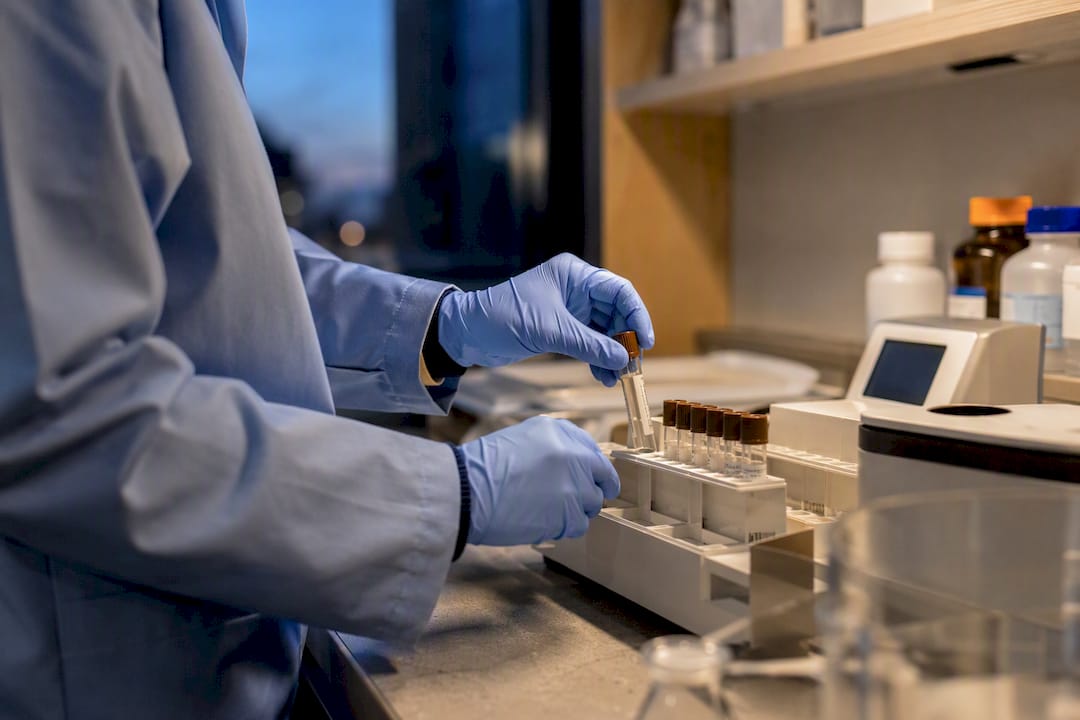
Clinical data management is the process that turns raw trial data into a validated, analysis-ready dataset fit for regulatory submission. It covers collection, cleaning, coding, and harmonization, guided by standards like Good Clinical Data Management Practices (GCDMP), the CDISC family of standards (CDASH, SDTM, ADaM), and 21 CFR Part 11’s rules for electronic records. Done well, clinical research and data management are invisible. Done poorly, it delays database lock, triggers audit findings, and undermines the statistical conclusions a trial exists to produce.
This guide covers the full territory:
- The CDM lifecycle and how it interlocks with clinical operations and biostatistics
- Core processes like CRF design, edit checks, and discrepancy management
- The regulatory and standards framework every data manager needs
- Tools, automation, and how diagnostic data (labs, imaging) get integrated
- Privacy practices, statistical readiness, and career paths into the field
Kohealth Labs works at the diagnostics-integration layer of this process daily, reconciling lab and radiology feeds into analysis-ready bundles for CROs and sponsors, and that operational vantage point shapes much of what follows.
Key Takeaways
Clinical data management succeeds when standards like CDISC and GCDMP are applied from protocol design onward, not retrofitted after data collection begins.
| Point | Details |
|---|---|
| CDM lifecycle has clear stages | CRF design, EDC build, edit checks, discrepancy management, coding, reconciliation, and database lock each depend on the one before it. |
| Map to CDISC early | Aligning CRFs to CDASH before EDC build prevents costly SDTM/ADaM rework later in the study. |
| Diagnostics integration is a design decision | Reconciling lab and imaging formats works best when planned before first patient in, not fixed mid-study. |
| De-identification needs documentation | Choose Safe Harbor or Expert Determination deliberately and record the choice in the Data Management Plan. |
| Kohealth Labs consolidates diagnostics | Its single-contract model for labs and radiology reduces vendor handoffs and speeds reconciliation toward an analysis-ready dataset. |
What Is the Clinical Data Management Lifecycle?
CDM isn’t a single task. It’s a chain of custody for data that starts before the first patient enrolls and doesn’t end until the database locks and the archive closes. Each stage hands off to the next, and a mistake early in the chain compounds by the time it reaches biostatistics.
The lifecycle typically runs in this order:
- CRF design — case report forms are drafted to capture exactly the variables the protocol and statistical analysis plan require, nothing more.
- EDC build — the electronic data capture system is configured, annotated, and validated against the CRF specification.
- Data capture — sites enter data, often alongside external feeds from labs and imaging vendors.
- Edit checks — automated and manual checks flag out-of-range values, missing fields, and logical inconsistencies.
- Discrepancy management — queries go out to sites, get resolved, and get verified.
- Medical coding — adverse events, medications, and medical history get mapped to standardized dictionaries like MedDRA and WHODrug.
- Reconciliation — CDM cross-checks EDC data against external sources: safety databases, lab systems, imaging platforms.
- Database lock — once every discrepancy is resolved and every reconciliation signed off, the database freezes.
- Archive — locked data and its audit trail are preserved per regulatory retention requirements.
Clinical research associates (CRAs) monitor site compliance and source data. CDM owns the database and the query process. Labs and imaging vendors supply raw diagnostic results. Biostatistics waits at the end of the chain, and everything upstream determines whether their analysis is clean or delayed.
Database lock deserves particular respect. Once locked, no one edits the data without a documented, auditable unlock process, because unlocking after the fact raises questions about data integrity that regulators take seriously. Getting lock right the first time, rather than reopening it, is one of the clearest markers of a well-run CDM operation.
How Do You Run Core CDM Processes Without Rework?
The costliest mistakes in clinical research and data management happen early and surface late. A CRF field that isn’t mapped to CDASH conventions at design time looks fine for months, then forces a scramble when SDTM mapping begins. Building CDASH-aligned CRFs from the outset, with statisticians reviewing the draft before EDC build starts, prevents that scramble entirely.
EDC validation is where a lot of teams cut corners they later regret. A properly validated system needs:
- User acceptance testing (UAT) against every edit check and skip-pattern before go-live
- Documented audit trails that record who changed what, when, and why
- Version control on every form and edit-check specification, with a changelog tied to protocol amendments
- Re-validation whenever the database schema changes mid-study
Discrepancy management runs on a lifecycle of its own: detection, query generation, site response, resolution, and verification. Mature CDM teams track query aging and resolution rate as operational metrics, not just compliance checkboxes, because a query sitting open for six weeks is a data point nobody can trust yet.
Medical coding needs its own QC checkpoint separate from general data cleaning. Auto-coded terms should get a second human review before database lock, especially for adverse events, where a miscoded term can shift a safety signal.
Pro Tip: Build your database lock checklist during protocol design, not the week before lock. Include data cleaning completion, all reconciliations closed, coding QC signed off, and every stakeholder’s written approval. Retrofitting a checklist under deadline pressure is how steps get skipped.
Before lock, confirm: data cleaning is complete, all external reconciliations (labs, imaging, safety databases) are closed, medical coding has passed QC, and every required sign-off, from the lead data manager to the sponsor’s clinical lead, is documented.
Which Standards and Regulations Govern Clinical Data Management?
Four frameworks anchor almost everything in this field, and skipping any one of them creates rework or audit risk down the line.
CDISC standards (CDASH for collection, SDTM for the submission tabulation model, ADaM for analysis datasets) form the backbone of how data moves from CRF to regulatory filing. Mapping early to these standards rather than retrofitting them after database lock saves weeks of rework and keeps statisticians looped in from the start.
GCDMP, maintained by the Society for Clinical Data Management, distinguishes minimum standards from best practices across every CDM function, from CRF design to database closure. It’s the reference most SOPs and Data Management Plans are built against, and its guidance carries real weight in an audit.
21 CFR Part 11 governs electronic records and electronic signatures in FDA-regulated research. It requires that every change to an electronic record carry an audit trail documenting who made the change, what changed, when, and why. That requirement has to be designed into workflows, not bolted on through software alone.
ALCOA+ (attributable, legible, contemporaneous, original, accurate, plus complete, consistent, enduring, and available) is the data integrity framework regulators use to evaluate whether a dataset can be trusted.
As trials scale, manual CDM processes stop scaling with them, which is a core reason GCDMP now emphasizes automation and risk-based approaches as much as it does manual SOPs.
What Tools Do Clinical Data Managers Actually Use?
The terminology confuses newcomers fast: EDC, CDMS, and CTMS get used interchangeably when they shouldn’t be. An EDC (electronic data capture) system is where sites enter patient data directly. A CDMS (clinical data management system) often sits on top of or alongside the EDC, handling cleaning, coding, and reconciliation workflows. A CTMS (clinical trial management system) tracks operational logistics, site payments, monitoring visits, and enrollment, not the data itself. Confusing these leads teams to buy the wrong tool for the wrong job.
When evaluating a system, weigh:
- Validation capability — can the vendor provide documented validation evidence, or will your team validate it from scratch?
- Integration APIs — does it accept HL7/FHIR feeds from labs and DICOM from imaging vendors, or does everything require manual upload?
- Edit-check engine flexibility — can checks be modified without a full re-validation cycle?
- Audit trail depth — does it log field-level changes with timestamps and reasons?
- Export formats — does it output directly to SDTM-ready structures, or require a separate transformation layer?
Automation is reshaping the field faster than most training programs have caught up with. AI-assisted anomaly detection catches inconsistencies, like a lab value that’s plausible in isolation but implausible given a patient’s trajectory, that rule-based edit checks miss entirely.
The build-versus-buy decision usually comes down to trial volume. A sponsor running one or two studies a year rarely benefits from a custom-built CDMS; the validation burden alone outweighs the flexibility gained. Larger CROs running dozens of concurrent trials often justify the investment.
How Does Integrating Lab and Radiology Data Speed Up Trials?
Diagnostic data rarely arrives in a shape that plugs cleanly into an EDC system. Lab results might land as HL7 or FHIR messages, or as flat CSV exports depending on the vendor. Imaging data arrives as DICOM files that need a derived biomarker (tumor size, bone density, a radiological score) extracted before it means anything to a statistician. Reconciling these formats against EDC participant records is where a lot of trial timelines quietly bleed weeks.
The reconciliation work itself is mechanical but unforgiving. Specimen IDs have to match patient IDs across systems that were never designed to talk to each other. Units need harmonizing, since one lab reports glucose in mg/dL and another in mmol/L. Timestamps need aligning to the visit schedule, because a lab draw logged three days off from its visit window can throw off an entire safety analysis.
When diagnostics run through separate vendors for labs and radiology, each vendor relationship adds its own onboarding, its own data format, and its own delay. Consolidating that into one contract and one data pipeline removes handoffs that otherwise stack up, one reconciliation queue at a time.
This is precisely where a single-contract model for integrated diagnostics changes the math. When lab and imaging services run through one coordinated pipeline instead of two or three separate vendor relationships, the identifier-matching and format-harmonization work happens once, upstream, instead of being reinvented by each sponsor’s CDM team.
Common pitfalls worth planning around:
- Delayed feeds from a diagnostic vendor that stall edit checks downstream
- Mismatched patient identifiers between the EDC and the lab or imaging system
- Derived imaging biomarkers that need documented, auditable calculation methods, not a black-box output
Sponsors that treat diagnostics integration as a design-phase decision, not a late fix, tend to reach database lock measurably faster than those retrofitting it mid-study.
How Should Trial Data Be De-Identified and Secured?
Protecting participant identity while keeping data usable is a balancing act, and HIPAA gives two accepted paths for it. The Safe Harbor method strips 18 specific identifier categories, dates, names, geographic detail smaller than a state, and is simple to apply but sometimes over-removes useful research variables. Expert Determination uses a qualified statistician to certify that re-identification risk is very small, which preserves more analytical detail but requires documented statistical justification.
Whichever path you choose, secure storage practices need to sit alongside it:
- Encryption at rest and in transit for every dataset containing identifiable or coded information
- Role-based access control (RBAC) so only authorized team members reach identifiable fields
- Audit logs on every access event, not just every edit
- A secure linkage key, held separately from the analysis dataset, so re-identification for legitimate follow-up remains possible without exposing identity in the working data
Before sharing data outside the immediate study team, whether with a regulator, a data repository, or a collaborating institution, a Data Use Agreement (DUA) should spell out permitted uses and retention limits. All of this, de-identification method, storage controls, and retention policy, belongs written into the Data Management Plan, not left as institutional tribal knowledge.
What Makes Trial Data Ready for Statistical Analysis?
A dataset can be clean and still be unusable for analysis if it isn’t mapped correctly. SDTM and ADaM mapping exist precisely to make analysis reproducible: a properly mapped ADaM dataset lets a second statistician rerun the same analysis and get the same result, which is the entire point of regulatory scrutiny.
CDM’s job before handoff includes:
- Documenting how missing data will be handled (imputation, exclusion, or flagging) before analysis begins, not after
- Building derivation logic for chronology variables like time-to-event or visit windows with full traceability back to raw data
- Flagging protocol deviations that could affect the analysis population definition
Small trials carry their own risks. With limited sample sizes, a single analytical method can produce misleading conclusions, so corroborative analyses using more than one statistical approach, along with hierarchical models that borrow strength across related endpoints, help avoid overconfident readings of thin data.
None of this works as a handoff at the end. CDM and biostatistics functioning as two separate silos, with biostatistics discovering formatting problems only after database lock, is one of the most preventable sources of trial delay.
How Do You Start a Career in Clinical Data Management?
Most data managers don’t start in CDM. They arrive through data reviewer roles, clinical research coordinator (CRC) positions, or data-entry work that exposes them to EDC systems and query workflows firsthand.
- Get exposure to a live EDC system. Nothing teaches edit-check logic and query workflows like working inside one, even in a junior role.
- Learn CDISC standards deliberately. CDASH, SDTM, and ADaM literacy separates a competent data manager from an exceptional one, and it’s learnable through self-study before you have a job that requires it.
- Pick up medical coding basics. Familiarity with MedDRA and WHODrug conventions makes you useful on day one of a coding-heavy study.
- Build regulatory awareness. Understanding 21 CFR Part 11 and GCDMP isn’t optional if you want to advance past entry-level tasks.
- Add basic statistics or programming. SAS, R, or SQL fluency, even at a modest level, opens doors to more technical CDM roles.
The Society for Clinical Data Management’s CCDM certification is the field’s recognized credential, and it’s worth pursuing once you have a year or two of hands-on experience to anchor the coursework. Salary and advancement track closely with therapeutic-area depth, technical tooling skills, and, eventually, the ability to lead a team through a database lock without drama.
What Belongs on a Pre-Launch DMP Checklist?
A Data Management Plan written thoroughly before first patient in is one of the strongest predictors of a study that locks on schedule.
- Define the data flow, from CRF field to SDTM domain, with every transfer point documented.
- Specify edit checks, both programmed and manual, with clear escalation rules for each.
- Write the reconciliation plan for every external data source: labs, imaging, safety databases.
- Document transfer formats and frequency for each diagnostic vendor feed.
- Detail security and retention policies, tying back to your de-identification and storage approach.
- Run pre-launch validation: UAT on every edit check, test transfers with each lab and imaging vendor, and a full mock data run before go-live.
- Assign sign-off responsibilities clearly, so no one assumes someone else already approved a step.
Pro Tip: Run at least one test transfer with each diagnostic vendor using realistic mock data before first patient in. Catching a format mismatch during a test run costs an afternoon; catching it three weeks into enrollment costs a data cleaning crisis.
Timeline checkpoints worth building into your project plan: DMP finalized before site initiation, EDC UAT complete two to four weeks before first patient in, and test transfers with every diagnostic vendor confirmed before enrollment opens.
An Editorial Take on Where CDM Actually Breaks Down
Most CDM training focuses on the mechanics: build the CRF, write the edit checks, run the queries. What gets underemphasized is that the biggest delays rarely come from any single broken process. They come from the seams between vendors, the identifier that doesn’t match, the format that needs manual translation, the reconciliation queue that sits untouched because three different companies each think another one owns it.
Integrated diagnostics attack that seam problem directly. When lab and radiology data flow through one coordinated pipeline instead of separate vendor relationships, the reconciliation work that used to happen in a CDM team’s inbox happens upstream instead. The result is a shorter gap between data collection and an analysis-ready dataset, AI-assisted deviation flagging that catches issues before they reach a manual query, and outputs already aligned to the regulatory structures a submission requires.
How Kohealth Labs Simplifies Diagnostic Data Integration
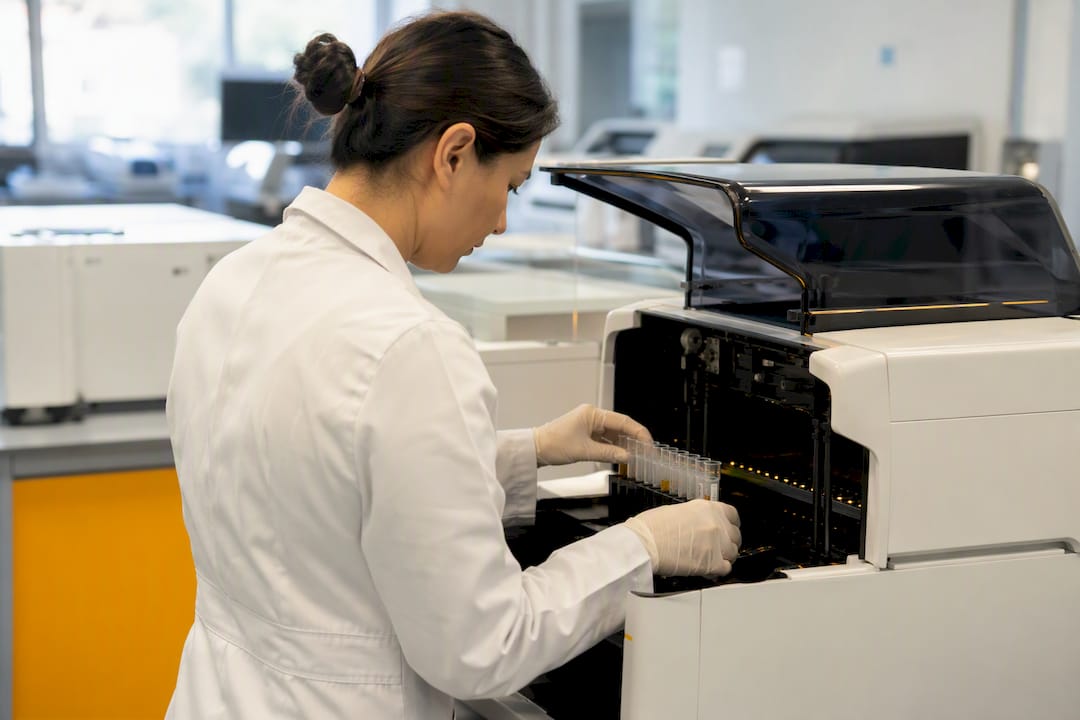
If your trial timeline keeps slipping at the reconciliation stage, the fix usually isn’t more staff. It’s fewer vendor handoffs. Kohealth Labs runs labs and radiology through a single contract instead of two or three separate vendor relationships, so specimen IDs, imaging biomarkers, and lab results arrive already reconciled into one analysis-ready data bundle.

That single-contract structure means one onboarding process instead of three, one data format instead of several competing ones, and AI-assisted deviation detection built into the pipeline rather than added as an afterthought during database lock prep. For CROs and sponsors managing pharmaceutical trial data delays, the practical upside is fewer reconciliation queues sitting open and a faster path to a locked, regulatory-aligned database.
If you’re scoping diagnostics for an upcoming study, request a pilot walkthrough of Kohealth Labs’ clinical trial diagnostics services and see how the integration maps onto your current protocol.
Frequently Asked Questions
What is the difference between clinical data management and biostatistics? CDM collects, cleans, codes, and structures trial data so it’s accurate and standardized. Biostatistics analyzes that finished dataset to answer the trial’s scientific questions. The two functions depend on each other closely, but CDM’s work has to be complete and validated before biostatistics can trust its inputs.
How long does clinical trial data management typically take from first patient in to database lock? It varies by trial size, number of external data sources, and how early the Data Management Plan was finalized. Studies with well-integrated diagnostic feeds and early CDISC mapping tend to reach lock faster than studies retrofitting standards or reconciling vendor data late.
What certification should someone pursue for a career in clinical data management? The Certified Clinical Data Manager (CCDM) credential through the Society for Clinical Data Management is the field’s recognized standard, typically pursued after a year or two of hands-on EDC and coding experience.
Why does database lock matter so much in clinical research and data management? Once locked, the database becomes the fixed source for statistical analysis and regulatory submission. Reopening it after the fact raises data integrity questions, so getting every reconciliation and sign-off right before lock is far cheaper than fixing problems after.
How does integrating lab and radiology data actually speed up a trial? It removes the reconciliation delay that happens when separate vendors use different identifiers, formats, and timelines. A single coordinated pipeline resolves those mismatches upstream instead of leaving a CDM team to manually match specimen IDs and imaging biomarkers against EDC records after the fact.
Sources
These sources back the standards and practices covered throughout this guide: