
8 Steps to Analysis Ready Lab Data: Standards First for Trial Sponsors
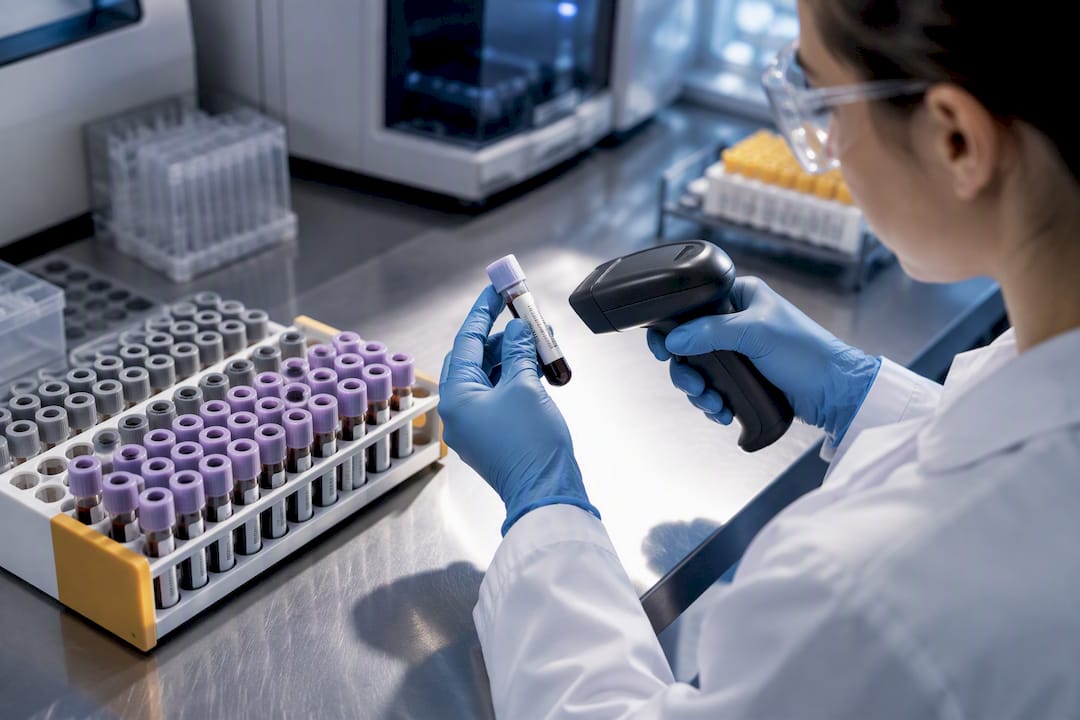
Analysis-ready lab and imaging data are validated, standards-aligned bundles, built on FHIR DiagnosticReport and Observation resources plus standardized DICOM metadata, that preserve source values and provenance while exposing machine-readable fields for analysis, reporting, or regulatory review. This is distinct from a scanned PDF or a raw HL7 feed sitting in an inbox. For clinical researchers and trial sponsors, the difference determines whether a dataset can be queried and submitted, or whether someone spends weeks re-keying it by hand.
TL;DR:
- Analysis-ready lab data requires mapping results to LOINC, expressing units in UCUM, and referencing standardized coding for qualitative results for interoperability.
- Validating the entire data pipeline from specimen collection to delivery and analysis variable ensures traceability and prevents costly rework later.
- Imaging metadata must be complete, accurate, and linked to DICOM and FHIR resources, with manual review used to address persistent gaps or privacy concerns.
- Early planning of data structure, codes, and validation protocols before collection minimizes delays and reprocessing during trial audits.
- Choosing a laboratory partner who can deliver structured, standardized results with provenance documentation streamlines compliance and regulatory submission.
What Standards Make Lab and Imaging Data Analysis-Ready?
A result only becomes analysis-ready when it carries both its narrative and its atomic parts. HL7’s FHIR model handles this by pairing DiagnosticReport with referenced Observation resources: the report stays human-readable, while each individual test value stays queryable by software. Strip out the Observation layer and you’re left with a PDF that a person can read but a database cannot use.
The US Core Laboratory Result Observation Profile spells out what “complete” actually means under USCDI expectations. A conformant lab Observation needs, at minimum:
- A status code and a test code, preferably mapped to LOINC rather than a local lab code
- A result value expressed with UCUM units, not free text like “mg per dL” typed three different ways across systems
- Specimen identification, effective timestamp, and issued date
- Reference range and interpretation flags (high, low, critical)
- Coded qualitative results in SNOMED CT, so “positive” and “reactive” don’t fracture into a dozen local synonyms
That last point matters more than most teams expect. Research on lab interoperability has found that LOINC coding alone doesn’t guarantee semantic interoperability; inconsistent units and mismatched enumerated values for qualitative results remain common even in LOINC-mapped datasets. Coding the test isn’t enough. The unit, the method, and the value set around it all have to line up too.
Imaging follows a parallel logic. DICOM metadata needs to map cleanly into FHIR’s ImagingStudy resource, with that resource linked back to the DiagnosticReport describing the read. Without that linkage, you get pixel data with no analytic home.
How Do You Turn Raw Lab Output Into Analysis-Ready Data?
Lab data preparation is a sequence, not a single export step. Skipping steps is how teams end up rebuilding datasets six months into a trial.
- Define the target structure first. Decide whether the destination is a FHIR bundle, an SDTM domain, an ADaM analysis dataset, or a sponsor-specific spec, before anyone touches a mapping table.
- Map local test codes to LOINC. One standardization study found that mapping a majority of unique local test codes to LOINC covered most of the actual result volume, since a small set of high-frequency tests accounts for most orders, according to a laboratory standardization study.
- Normalize units to UCUM and reconcile coded values. This is where inconsistent local units get caught before they poison downstream statistics.
- Preserve the source value, unit, method, and reference range alongside the standardized fields. Never overwrite the original result.
- Validate against the target structure. Run the FHIR bundle or SDTM/ADaM dataset through structural validation and reconcile every exception by hand, not by suppressing the error.
- Produce define.xml and an ADRG (Analysis Data Reviewer’s Guide) when the destination is a regulatory submission, documenting every derivation.
- Retain a full audit trail covering who touched the record, when, and why.
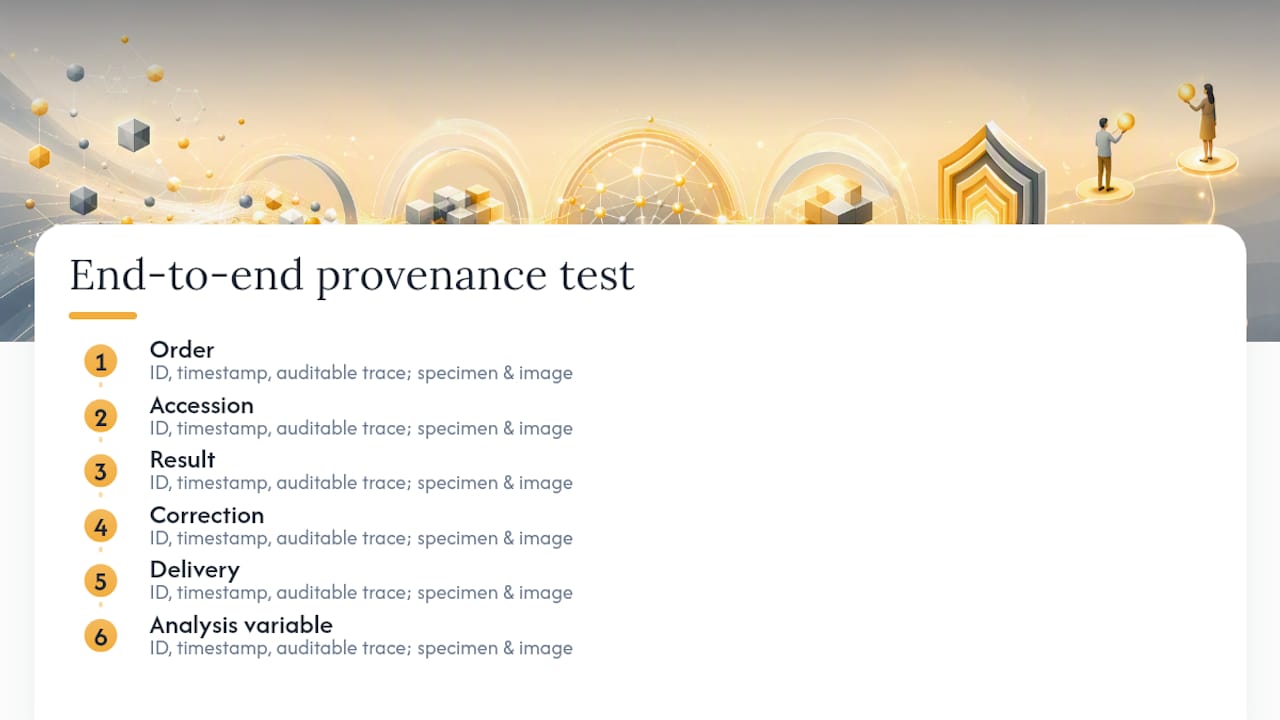
- Run an acceptance test by tracking one specimen and one imaging study end to end, order through delivery, before declaring the pipeline production ready.
Automated lab data processing can execute most of these steps, but step six and step eight still need a person who understands the trial protocol or the practice’s reporting needs. Software catches structural errors. It rarely catches a clinically wrong reference range.
What Does Imaging Data Need Beyond the Image File?
An imaging study isn’t research-grade just because the pixels are intact. Validators need to check patient, study, series, and instance identifiers, modality, acquisition parameters, and timestamps, then confirm that DICOM metadata maps correctly into FHIR’s ImagingStudy resource and links to the associated DiagnosticReport.
Metadata completeness is the recurring failure point. One large radiology data model project organized a very large volume of DICOM data and recorded device and image-resolution accuracy above 99.9 percent, yet still flagged metadata incompleteness as a persistent barrier to analysis-ready imaging. High technical fidelity doesn’t guarantee complete metadata.
Pseudonymization adds another layer of difficulty: strip too much and you lose research linkage; strip too little and you fail privacy review. The fix that works in practice is automated metadata validation paired with human exception review, since imaging metadata gaps rarely resolve themselves through scripting alone.
Why Do Trial Sponsors Need Both SDTM and ADaM?
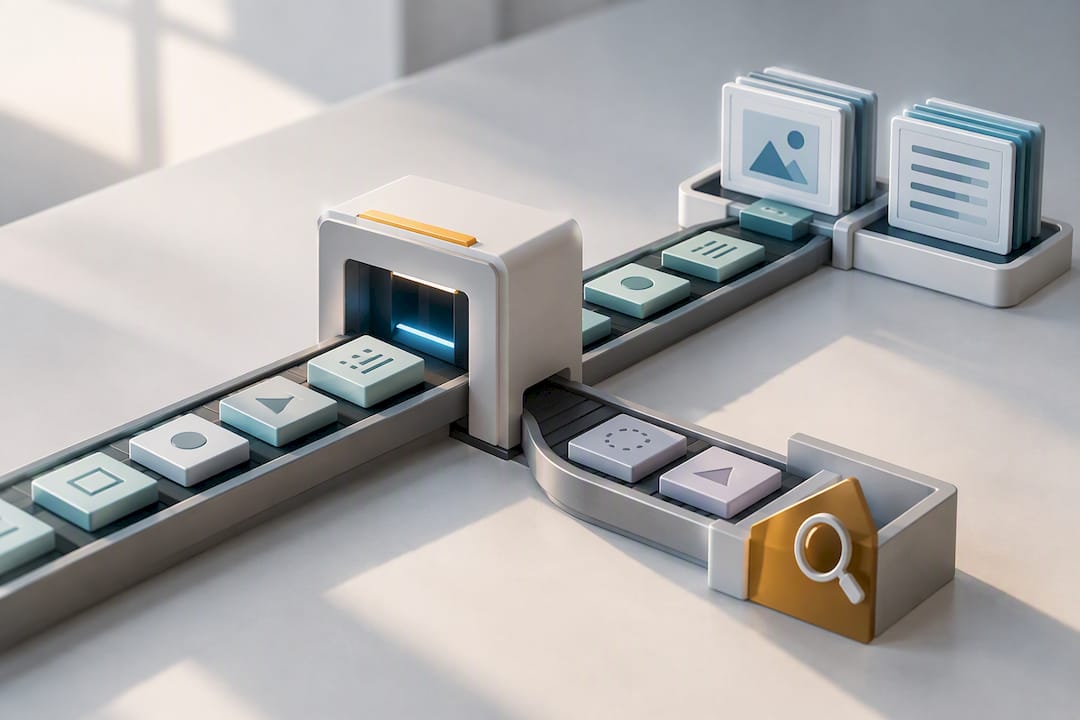
SDTM and ADaM solve different problems, and sponsors who treat them as interchangeable end up rebuilding datasets late in a submission cycle. SDTM tabulates source data into standardized domains. ADaM restructures that tabulated data into analysis-ready variables that support the actual statistical output in a clinical study report. The FDA’s Study Data Technical Conformance Guide recommends implementing SDTM structure before the trial even starts collecting data, not retrofitting it afterward.
ICH E6(R3) frames the underlying quality bar as fitness for purpose. Its guidance describes accuracy, completeness, provenance, and traceability as the criteria for judging whether secondary-use data is fit for a trial’s intended analysis, with validation effort scaled to risk rather than applied uniformly.
For submission, that means define.xml and an ADRG or SDRG documenting every derivation, plus a clear trace from the original source value to the final analysis variable. Never overwrite the source result to make the analysis dataset look cleaner. The reviewer needs to see where a value came from, not just where it ended up.
How Do You Evaluate a Lab Partner for Analysis-Ready Data?
Choosing a laboratory partner for standardized data delivery comes down to a short list of concrete, checkable items rather than a sales pitch.
- Semantic standardization: Does the lab map results to LOINC, normalize units to UCUM, and code qualitative findings in SNOMED CT by default?
- Structured delivery: Can it hand you FHIR bundles with DiagnosticReport and Observation resources, not just a PDF attachment?
- Imaging interoperability: Does it map DICOM metadata to FHIR ImagingStudy and link studies to reports?
- EMR/LIS connectivity: Does it support your practice management or LIS system’s integration requirements without custom middleware for every feed?
- Turnaround and correction workflows: How fast are routine results, and what happens when a value needs amending after delivery?
- Validation evidence: Will it show you a sample bundle, a mapping table, or an acceptance-test report before you sign anything?
- Security posture: Pseudonymization options, encryption in transit and at rest, role-based access, and audit logging.
Ask for these artifacts during evaluation, not after onboarding. A partner that can’t produce a sample FHIR bundle on request usually can’t produce one reliably in production either.
What Provenance Should You Preserve, and How Do You Test It?
Every analysis-ready record needs a documented trail back to its source: the original value and unit, the testing method, specimen ID, accession and result timestamps, the performing organization, and a full change history for any correction. Keep the source fields next to the standardized ones. Normalizing a result and discarding the original is a common shortcut that undermines interpretability later, when someone needs to know exactly what the lab measured before mapping.
The simplest way to confirm a pipeline works is to run one specimen and one imaging study through the entire path, order to accession to result to correction to delivery to analysis variable, and verify that every step carries an identifier, a timestamp, and an auditable trace.
Pro Tip: Automate the structural validation, but route anything flagged as a metadata gap to a human reviewer instead of a default value. Auto-filling a missing field almost always creates a worse error than leaving it flagged.
Kohealth Labs Perspective: What Standards-First Actually Saves
Teams that agree on mappings and acceptance tests before specimen collection starts consistently spend less time on rework and fewer cycles on audit findings later. That sequencing, standards first, collection second, is the single change that separates smooth trial data delivery from months of retroactive harmonization. Agree on the mapping table and the acceptance test before the first tube gets drawn.
— Kohealth Labs
Request an Analysis-Ready Data Bundle From Kohealth Labs
Some laboratories require you to piece together lab data from a national vendor and reformat it yourself. Rather than handing you a PDF and calling it done, Kohealth Labs delivers integrated diagnostics built for CROs and pharma sponsors, with LIS and EHR integration, specimen pickup, and standardized, validated data delivery baked into the workflow from the start.

If your practice or research organization needs lab and imaging results that arrive already mapped to LOINC, normalized to UCUM, and structured for your analysis pipeline, this is the kind of partnership that removes the harmonization step entirely rather than making you own it. Some laboratories serve the Dallas-Fort Worth area and support healthcare organizations beyond North Texas and can work as a primary lab or as a supplemental partner alongside existing national lab relationships. Schedule a specimen pickup or contact the team about CRO onboarding to request a sample analysis-ready bundle before your next data cycle starts.
Primary Standards to Consult
Start with HL7’s DiagnosticReport resource and the US Core DiagnosticReport lab profile for structural rules, then the FDA’s technical conformance guide for SDTM and ADaM submission expectations.
Sources
- DiagnosticReport - FHIR v5.0.0
- ICH E6(R3) consolidated guideline (2026)
- Interoperability and LOINC limitations study (PMC3243154)
- Study Data Technical Conformance Guide (FDA)
FAQ
What Is Analysis-Ready Lab Data?
It’s a validated dataset where lab results are mapped to LOINC, expressed in UCUM units, and delivered as FHIR DiagnosticReport resources referencing discrete Observations, rather than a static PDF report.
Why Isn’t a Lab PDF Considered Analysis-Ready?
A PDF preserves the readable report but hides the atomic values software needs for querying and statistics. FHIR’s DiagnosticReport model solves this by referencing Observation resources alongside the report itself.
What’s the Difference Between SDTM and ADaM?
SDTM organizes source data into standardized tabulation domains, while ADaM restructures that data into the analysis-ready variables used for statistical reporting. The FDA’s conformance guide recommends planning both early rather than converting late.
How Does Kohealth Labs Support Analysis-Ready Data Delivery?
Kohealth Labs provides integrated diagnostics for practices and research sponsors, including LIS and EHR integration, specimen pickup, and standardized data delivery designed to reduce manual harmonization work. Current pricing and service details are available on request through the Kohealth Labs site.
What’s the Biggest Pitfall in Imaging Data Preparation?
Incomplete metadata is the most common failure point, even when image quality itself is high. One large imaging study recorded device accuracy above 99.9 percent while still flagging metadata incompleteness as a recurring issue requiring human review.